












Emergency preparedness is essential for seniors, especially those who are very ill, have limited mobility, or have a cognitive impairment like Alzheimer’s or dementia.
It’s one thing if you’re in charge of an older adult’s emergency plan and they live with or near you. But it’s completely different if they’re living in an assisted living community or a nursing home. In case of an emergency or natural disaster, you’ll have to rely on the staff to keep your loved one safe.
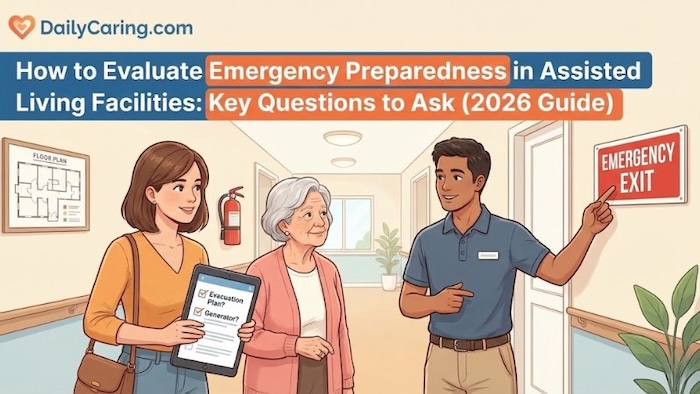
An article from Next Avenue offers wise advice on how to find out whether your older adult’s care community has plans, procedures, and supplies in place to keep residents safe during an emergency.
We summarize the key questions that help you evaluate if the care community has detailed emergency plans, is ready for power outages, knows what to do during a fire or flood, and protects residents from theft or intruders.
4 Key Areas to Evaluate for Emergency Preparedness in Assisted Living Facilities
1. Emergency plans
- What are the detailed emergency plans?
- How is staff trained and kept up to date on those plans?
- How will they provide the necessary food, water, medication, and shelter for the residents (including food and beverages for special health needs)?
- Is there always someone available to handle emergency situations? Is there always a backup person available?
- What’s the plan if none of the leaders are available to take charge?
2. Power outages
- Are generators available to restore power? Is there a backup in case one generator fails?
- Are the generators located in a safe, well-ventilated area away from the residents?
- How much extra food is kept on hand? Federal emergency recommendations call for a minimum of 3 days' worth.
- How much drinking water is kept on hand? Federal guidelines recommend at least 1 week’s worth per person.
- If food or water runs out, what’s the plan to get more?
- If a high-risk storm or natural disaster is approaching, would food and water reserves be increased?
- Does the community set aside freezers containing frozen bags of water? Federal guidelines say they can be used to keep food and medications cold, cool overheated residents, and provide drinking water once melted.
3. Fire and flood safety
- What is the evacuation plan for fires and for floods?
- Is there a safe location where residents will be evacuated to?
4. Thefts and burglaries
Though it’s not an emergency situation, it’s also important to protect residents from theft and unauthorized visitors.
These protections are critical for older adults with cognitive impairment. Someone with Alzheimer’s or dementia might not know if a theft occurs or wouldn’t be able to report it accurately. In general, it’s safest to keep valuables elsewhere, such as with a trusted family member or in a bank safety deposit box.
Assisted Living Safety Audit: A Checklist for Families
Evaluating emergency preparedness can feel overwhelming when you are looking at dozens of pages of facility documents. To make your next visit or phone call easier, use this interactive checklist. It highlights the “must-have” items that ensure a facility is prepared to protect your loved one during a crisis.
📋 Assisted Living Safety Checklist
Take this with you during your facility tour or use it during your next family meeting with administration.
- Detailed, written emergency plan is available for review.
- Staff training records for disasters are up-to-date.
- There is a designated “Back-up” leader identified for after-hours.
- Generator is tested monthly (ask for the date of last test).
- Minimum 3-day food supply and 7-day water supply on-site.
- Specific plan for refrigerated medications during power loss.
- Entrance/Exits are monitored 24/7 (Camera or Guard).
- The facility carries theft insurance for resident belongings.
Pro-Tip: If you get vague answers, don't be afraid to ask for the [local ombudsman](https://dailycaring.com/nursing-home-complaints-the-ombudsman-is-on-your-side/) contact info right there. Often, the request alone prompts a more detailed response from management.
What to ask:
- Is there a bond or insurance policy that covers theft in their facility?
- Do formal charges and a conviction have to be filed before stolen items are returned or financial compensation is given?
- Are the entrance/exit doors to the care community always locked?
- Is there a guard or receptionist at the door to verify employees and visitors who enter and exit? Is the door monitored 24/7?
Watch Out for These Safety “Red Flags”
While every facility has its own unique way of handling logistics, certain answers are immediate cause for concern. If a facility manager gives you one of the following responses during your evaluation, it may indicate a lack of serious emergency planning.
- ✕ “The plan is for employees only.” — If they won't share a summary of the resident-facing emergency plan with families, they likely don't have a transparent protocol.
- ✕ “We rely on 911 for all emergencies.” — While 911 is vital, a facility must have independent protocols for power outages, floods, or lockdowns before first responders arrive.
- ✕ “We don't have a back-up generator on-site.” — For seniors relying on oxygen, refrigerated meds, or elevators, a lack of on-site power is a major safety risk.
- ✕ Vague Evacuation Plans: If they cannot name the specific location or “sister facility” where residents are moved during a fire or flood, the plan is incomplete.
Get Help if Assisted Living Emergency Plans are Inadequate
Asking these questions and learning about the care community’s emergency plan will reassure you that your older adult will be well cared for during an emergency.
If the management doesn’t have a good plan in place and won’t make any changes, consider contacting the local ombudsman. They can advise you on local regulations and how to keep an older adult safe in the event of a disaster.
Recommended for you:
- How to Deal with Problems in Assisted Living: Answers to 7 Top Questions
- Nursing Home Complaints? The Ombudsman Is on Your Side
- Handy Checklist and Tips on How to Find a Good Assisted Living Facility
About the Author
https://www.nih.gov/about-nih/who-we-are/nih-director/articles/next-avenue-interviews-dr-collins-about-his-passion-music-features-his-band-affordable-rock-n-roll-act

[…] explained in the Daily Caring article How to Evaluate Emergency Preparedness in Assisted Living: Questions to Ask, “emergency preparedness is essential for seniors, especially those who are very ill, have […]