













If you’re reading this, chances are you’re running on fumes. You’re the one who holds all the schedules in your head, who lies awake at night wondering if you’ve forgotten something, who pushes through exhaustion because the weight of responsibility feels like it rests solely on your shoulders.
I’ve sat with countless family caregivers who whisper the same thing: “I just feel like I should be able to handle it all.” That feeling isn’t a sign of failure; it’s a sign of how deeply you care. But here’s the truth I need you to hear: caregiving was never meant to be a solo act.
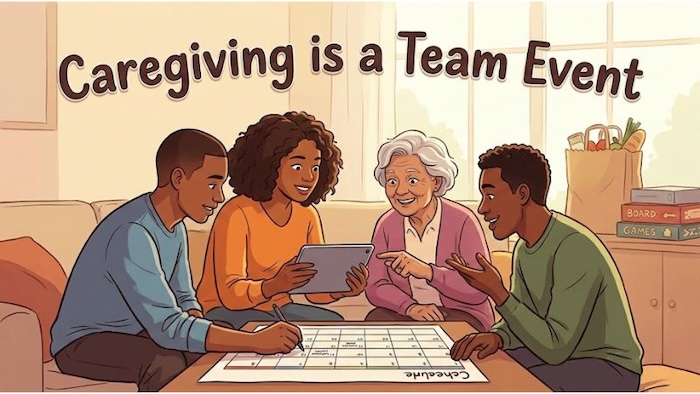
Letting others in isn’t a weakness; it’s one of the most courageous and loving things you can do for yourself and the person you’re caring for. Let’s talk about why it feels so hard, and how to gently start letting go of the guilt that’s holding you back.
Caregiving Is a Team Event, Not a One-Person Show
Tell me if this sounds familiar: your to-do lists are longer than a CVS receipt, you can’t remember the last time you got a full night’s sleep, and you haven’t had a relaxed meal in months. You’re exhausted and feeling resentful.
If this sounds like your life, you’re not alone. Too many family caregivers feel like this. It’s not your fault that you can’t get everything done – you need help. Taking care of an older adult just isn’t something one person can do alone (and stay healthy and happy).
Sometimes it’s tough to find the help you need. But often, there are people who sincerely offer to help or local services you could use, but you turn them down out of habit. Trying to get help with caregiving can feel uncomfortable and even guilty.
Why Is It hard to Accept Help When Caregiving?
Allowing others to help, asking for help, or hiring help is something many caregivers resist. There’s a natural tendency to feel like you can get everything done on your own and that you’re the only one who can get it done right.
Often, caregivers don’t accept help because of underlying feelings of guilt, fear, and unworthiness.
In 2026, the landscape of caregiving has shifted. With the rise of digital health tools and complex medical systems, the mental load is heavier than ever. You aren’t just a caregiver; you’re a coordinator, a tech troubleshooter, and an advocate. This increased complexity makes it even harder to step away, yet more vital that you do.
Guilt and fear:
- You feel guilty for even wanting help and for not wanting to do everything yourself.
- You worry that things won't turn out right, your older adult will get hurt, or people will blame you for not doing it yourself.
Feeling unworthy:
- You don't feel that you deserve support or help.
- As the spouse/adult child / relative, you’re supposed to do it all yourself.
Lack of trust:
- It’s scary to trust others with important tasks, count on them, and to believe that things will be okay even if you’re not there to manage every aspect of the situation.
3 Ways to Overcome the Guilt Associated with Getting Help with Caregiving
First, it’s helpful to notice and admit to yourself that you’re having some of these feelings. Next, slowly work through these feelings rather than let them keep you overworked and completely stressed out.
3 tips for working through negative feelings about accepting caregiving help
- Ease guilt and fears by reminding yourself that having negative feelings about caregiving is normal, that life is unpredictable, and that constantly being afraid or worried about what might happen won’t prevent bad things from happening.
- Overcome feelings of unworthiness by talking to a trusted friend. Get their opinion on how you’re feeling. We bet they’ll convince you that you definitely need and deserve the help!
- Increase trust and reduce worry by having someone work together with you on caregiving tasks for a week before you leave them alone with your loved one.
Getting Help Can Make You a Better Caregiver
Did you know that getting help will actually make you a better caregiver? That might sound crazy, but it’s true.
| Impact Area | The “Solo” Caregiver | The “Supported” Caregiver |
|---|---|---|
| Stress Levels | High risk of chronic burnout | Manageable; regular “reset” periods |
| Health | Higher rates of insomnia & illness | Better sleep and physical stamina |
| Patience | Quick to anger or feel resentful | More emotional bandwidth |
| Longevity | High risk of “Caregiver Crisis” | Sustainable for the long-term journey |
If you get help, you’ll reduce stress, cut down your to-do list, and take time for yourself regularly. This is guaranteed to improve your health and mood. When you’re feeling better, you’ll be more patient and caring with your older adult.
Remember that the ‘Sandwich Generation' is now the norm. More than half of us are balancing care for an older adult with the needs of our own children or careers. In this modern era, external help (whether it’s a grocery delivery app or a professional home health aide) is a necessary tool for survival, not a luxury you have to earn.
Final Thoughts on Getting Help With Caregiving
Ultimately, accepting help isn’t about stepping back from your role; it’s about protecting your ability to stay in it for the long haul. When you allow someone else to sit with your loved one for an hour, or when you ask a neighbor to pick up groceries, you aren’t “giving up” your responsibilities. You are choosing to show up as a healthier, more present version of yourself.
The goal isn’t to do it all, it’s to do what matters most, together. You’ve poured so much of yourself into this journey; you deserve to have some of that poured back into you. Start small, let people in, and remember that by taking care of yourself, you are continuing to take the very best care of them.
You might also like:
— 4 Caregiving Tips for Getting Siblings to Help with Parents
— Overcome 3 Excuses from Relatives Who Avoid Caregiving
— Local Community Resources for Seniors and Caregivers: Area Agency on Aging
— Medicare Pays for In-Home Care Under the PACE Program
About the Author

Connie is the founder of DailyCaring.com and was a hands-on caregiver for her grandmother for 20 years. (Grandma made it to 101 years old!) She knows how challenging, overwhelming, and all-consuming caring for an older adult can be. She also understands the importance of support, especially in the form of practical solutions, valuable resources, and self-care tips.

If my husband didn’t understand it would be easier, but he does and thinks everywhere I go he should go. He can’t help himself on the stool so he worries that he will be caught without help. So I can never go without him. He has been disabled for 25 years but as he ages it gets more difficult. He is 88 yrs old.
I’m sorry to hear that! It’s a tough situation and one that we hear about often.
Do your best to be firm and tell him that for a short time, once or twice a week, you must have some alone time and that you’ll make sure that he’ll be well cared for. Let him know that you love him and enjoy spending time together, but you need some alone time to recharge your batteries too. As long as someone else is there to help him, he’ll be safe.
He won’t be happy about it the first few times, but he will adjust. It’s important for you to be able to take a little time for yourself even if he doesn’t agree. It will help you continue caring for him without burning out. After all, it’s already been a very long journey for you. If your health declines, you may get to the point where you won’t be able to care for him at all. So the best thing to do is be proactive and do what you can to keep yourself healthy so you can keep going. Regular breaks are an essential part of taking care of yourself.
Looking after the elders is a big responsibility but if you can’t handle it, it’s not wrong at all to look for assistance. This just means that you want the best for your elderly loved ones and since you can’t accomplish that yourself, you will have to call for backup. Having help that is of high quality can bring utmost safety and protection to the seniors.
We agree 100%! It’s not for lack of trying that family caregivers need to bring in help. It’s often because the level of care needed becomes physically impossible for just one person to safely manage.