











I've walked through hundreds of homes with concerned family members, and I always start by looking at the light. Not the grand, structural things we can't change, but the simple, profound difference between a dim hallway and a well-lit one.
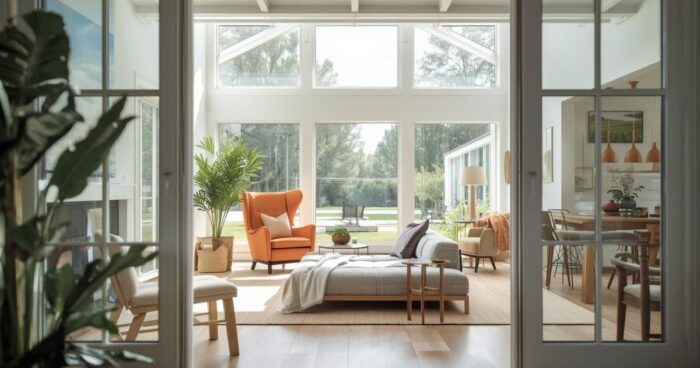
After a lifetime of navigating their own space, many older adults begin to lose contrast sensitivity; the ability to see where the step ends and the next one begins, or where the rug lies against the floor. That’s where falls start, in those shadowy inches we can no longer distinguish.
In 2026, we know that lighting is more than just a way to see the floor; it is a physiological regulator. As we age, our eyes require three times as much light to see clearly as in our 20s. But it’s not just about “more” light; it’s about the right light at the right time.
The “Circadian Crisis”
Recent JAMA Network research (October 2025) has uncovered a startling link: seniors exposed to harsh, bright lights after sunset face a 32% higher risk of heart disease. Why? Because artificial light suppresses melatonin and spikes cortisol, throwing the body’s internal clock into a state of “biological twilight.”
By transitioning to warmer, dimmer light in the evening, you aren't just setting a mood, you are protecting your loved one's cardiovascular system.
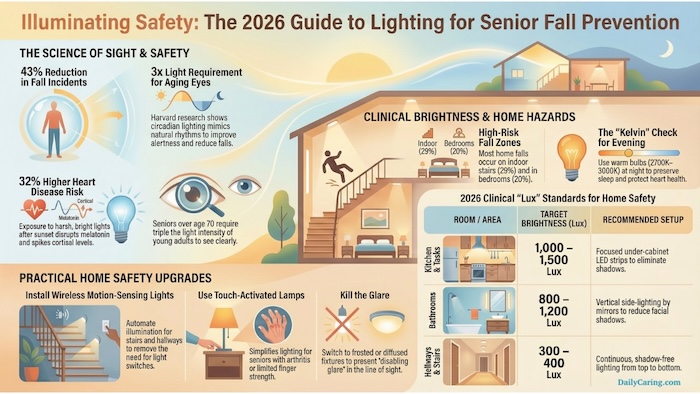
The 2026 Lighting Brightness Guide for Caregivers
When we talk about ‘better lighting,' we aren't just talking about turning on more lamps. We are talking about meeting the specific physiological needs of the aging eye. According to modern geriatric safety standards, different tasks require widely varying levels of light.
Use the guide below to ensure every room in your loved one's home meets the clinical ‘Lux' requirements for safety and clarity.
Good Lighting in the Right Places Can Reduce Fall Risk
One of the top ways to prevent falls in older adults is to ensure their living space is well-lit at all times. Being able to see clearly helps seniors maintain balance and avoid obstacles.
Updating lighting in key locations is a quick and inexpensive way to reduce fall risk and help seniors stay independent. Here are some lighting strategies to illuminate the right places and help prevent falls as you age in place.
What Are Wireless Motion-Sensing Lights?
Sometimes, aging adults don’t remember to turn on the lights or feel they don’t need them. Eliminating the need to turn on the lights ensures rooms, stairs, and hallways are always bright enough.
These wireless, stick-on, motion-sensing lights make it easy and quick to automatically illuminate dim areas, such as stairs, long hallways, or deep closets. They could also be used as a night light on a bedside table.
You won’t be restricted to places with a nearby outlet, and there are no wires to create tripping hazards.
Here are two options with good customer reviews:
- Mr. Beams Battery-Powered Motion-Sensing LED Stick-Anywhere Nightlight
- OxyLED Stick-on Anywhere Portable 10-LED Wireless Motion Sensing Light Bar
DailyCaring tip: For easy removal, use Command Mounting Strips
VIDEO: The Expert Guide to Lighting the Home to Reduce Falls
Caregiver Checklist: The 2 Minute Lighting Safety Audit
Now that you understand the science of brightness and the tools available, it’s time to put it into practice. You don't need a degree in lighting design to fall-proof your home; you just need a few minutes and a critical eye.
Use this quick, 2-minute audit to identify and fix the ‘hidden' lighting hazards in your loved one's living space today.
The 2-Minute Lighting Safety Audit
Use Touch Lamps
Arthritis and loss of finger flexibility and strength can make it difficult to turn regular lamp knobs. Seniors are more likely to use proper lighting when it’s easier for them to turn on lamps.
DailyCaring tip: Some customer reviews say that, with the plug adapter, the light can sometimes turn on by itself because of (normal) minor power surges. Using a power surge protector strip
Consider Automatic Night Lights
Regular night lights that plug into wall outlets are a great choice for bathrooms, bedrooms, and hallways. These automatic LED night lights
Check Bulbs and Batteries
These lights are easy to install, but it’s important to check batteries and bulbs every couple of months to make sure everything is still working.
DailyCaring tip: Add a recurring reminder to your calendar. That way, you won’t have to try to keep these tasks in your head.
Bottom Line: Better Lighting Matters When It Comes to Fall Risk
In the end, the goal isn't just brighter rooms; it's a clearer path forward for someone you love. Each motion-sensing light on a staircase or touch lamp by the bed is a small, quiet guardian, removing a tiny risk and replacing it with confidence.
As a caregiver, you carry so much, but ensuring a well-lit home is one burden you can gently set down. Let these simple changes be a daily reminder that safety isn't about taking away their independence, but about illuminating it, so they can continue to move through their world with steadiness and grace.
After all, a fall prevented isn't just an injury avoided, it's another day of living fully at home.
You might also like:
— Home Safety for Seniors: 10 Quick Fixes for Bathroom, Bedroom, and Kitchen
— Declutter Your Older Adult’s Living Space
— Bathroom Safety for Older Adults: Grab Bars and More!
About the Author

Connie is the founder of DailyCaring.com and was a hands-on caregiver for her grandmother for 20 years. (Grandma made it to 101 years old!) She knows how challenging, overwhelming, and all-consuming caring for an older adult can be. She also understands the importance of support, especially in the form of practical solutions, valuable resources, and self-care tips.
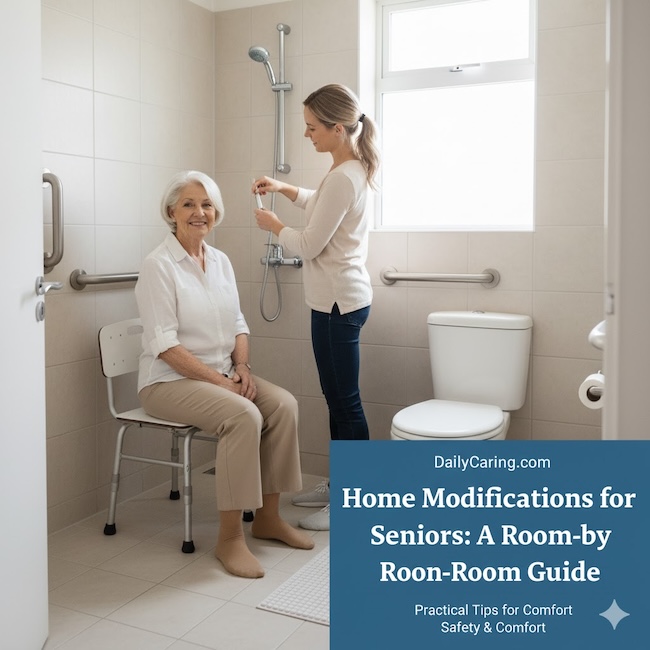
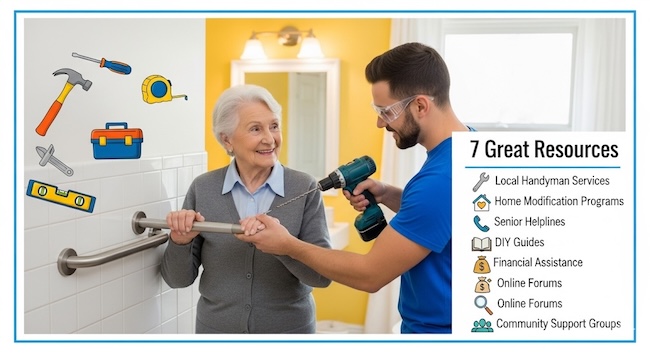
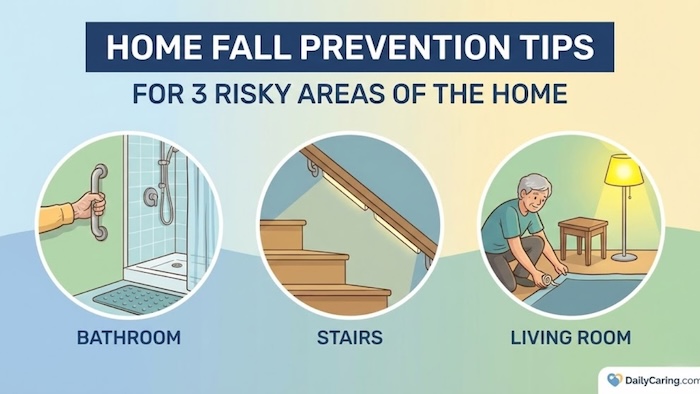
[…] install grab bars in areas like the bathtub and stairs to offer extra stability and prevent injury. Lighting is another important factor to consider. Make sure each room is brightly lit, and the switch is […]