













Elder financial abuse destroys lives and costs seniors a whopping $37 billion each year. Dr. Stacey Wood, Ph.D, one of the nation’s leading experts on elder financial abuse, shares eight ways caregivers can help seniors avoid scams and fraud.
Today, people over 50 hold more than 70% of the country's wealth. But elder financial abuse is all too common.

Fraudsters target older adults using a variety of scams and manage to steal an estimated $28.3 to $37.5 billion each year from American seniors. This figure accounts for the fact that a large majority of victims (especially those exploited by someone they know) never report the crime to authorities.
- Reported Losses (FBI): In 2024, the FBI's Internet Crime Complaint Center (IC3) reported that older Americans lost nearly $4.9 billion to fraud, a significant 43% increase from the previous year.
- Reported Losses (FTC): The Federal Trade Commission (FTC) reported that older adults (60+) lost $2.4 billion in 2024. The FTC notes that the reported figure likely represents only a fraction of the actual losses, which they estimate could be as high as $61.5 billion, given unreported cases.
Common Elder Scams and Their Costs
Fraudsters often use sophisticated tactics to target life savings. The categories with the highest financial impact include:
| Scam Type | Reported Annual Loss (Approx.) |
|---|---|
| Investment Scams | $1.8 billion (often involving cryptocurrency) |
| Tech Support Scams | $982 million |
| Romance Scams | $389 million |
| Business/Government Impersonation | $385 million |
Older people who are no longer working may be the most vulnerable to fraudsters. This is especially true if they also have disabilities and need to rely on others for access to the community and other assistance.
Some scams may specifically target vulnerabilities of certain seniors. They may also rely on well-known brand names or someone’s unfamiliarity with technology and social media.
Another common scam tactic is to push emotional hot buttons around romance, desirability, or even familial love.
We explain how caregivers can help prevent elder fraud and share eight ways to protect seniors from scammers.
We also explain what to do if you suspect that your older adult is the victim of fraud.
How Caregivers Can Help Prevent Elder Fraud
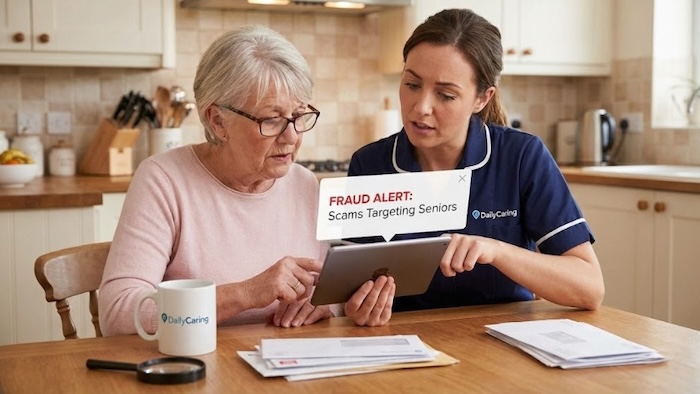
As a caregiver, you can help the seniors in your life avoid fraud and financial scams.
You can start by discussing common scams and how seniors can protect themselves.
You could also help them visit their bank, financial adviser, or lawyer for additional advice.
Encourage senior family members to request written details before engaging in any financial transactions. Then, have them take those written details to their lawyer or financial advisor for a second opinion.
8 Ways to Protect Seniors From Financial Scams
1. Stay involved in their life
The most important thing is to stay connected with your older adult.
By staying involved in their life, you can help protect them from the risks of isolation and loneliness, including fraud and scams.
2. Get a copy of their credit report every year
Review their credit report with them to ensure it’s accurate. If there are any errors, correct them immediately.
3. Buy a shredder
By bringing a paper shredder into the home, you can help your older adult shred unwanted credit card offers, financial statements, and receipts.
This reduces the chance that others can access their personal information.
4. Stay alert to signs of fraud
Keep an eye out for signs of potential financial fraud and abuse in your older adult’s life.
For example, someone who has always been very frugal may begin making large withdrawals from the bank.
Or, suddenly, historically careful seniors may have unpaid bills, collection calls, or insufficient-funds fees from their bank.
Even frequent ATM use by people who previously always visited the bank in person could be a warning sign.
5. Be aware of new friends and romances
New friends can be a welcome part of a senior's life, but loneliness can also be a gateway for fraudsters.
In person, a new friend may take special interest in going to the bank with your older adult or offer suspicious financial or estate planning services.
Romance scams targeting elders are increasingly common, but older adults may feel shy about discussing romantic or sexual issues with you.
These fake new friends and romantic interests may even try to convince seniors that their family members don't have their best interests at heart.
6. Be aware of people who are close to your loved one
Unfortunately, family members and hired caregivers can also take advantage of seniors.
Some of these individuals abuse the trust placed in them to handle financial matters and provide physical assistance.
Unethical family members or caregivers may pressure seniors to change their wills or to accept ample cash “gifts” or “loans.”
7. Teach seniors about online and social media fraud
Although in-person fraud remains all too common, online fraud is on the rise.
Don't hesitate to teach your older adult about the dangers of connecting with people online and through social media, as well as how common it is for internet fraudsters to pretend they’re someone else.
Please encourage them to verify that new online contacts are who they claim to be. Often, these fake “friends” and “lovers” can be overseas, making them especially difficult to track.
If your older adult begins wiring large amounts of money overseas or sending funds via Western Union, this is typically a major red flag that a fraudster is involved.
8. Be supportive and sensitive after a scam
If an older adult gets scammed, they may feel ashamed and embarrassed about falling for the scheme.
That could make them reluctant to talk about what happened.
Responding warmly and nonjudgmentally helps seniors feel supported and more willing to discuss the situation with professionals such as law enforcement, lawyers, or financial advisors.
What to do if you suspect financial abuse
If you suspect that your older adult is a victim of financial abuse, don't ignore the problem and hope it will go away – these scams can be devastating.
Reach out to them and ask gentle questions to understand why their financial situation is changing or whether someone in their life is pressuring them to make decisions.
If there are other close family members that you trust, ask them about your older adult’s financial changes and whether they know why they are occurring.
You can also report the fraud to their bank. Banks lose significant sums to fraud and are interested in stopping it. Plus, financial fraud is a crime, so local police also have a responsibility to investigate reports of scams.
Calling Adult Protective Services is another option, especially if a family member or hired caregiver is involved.
Recommended for you:
- Prevent Elder Fraud by Getting Rid of Junk Mail
- How to Help Aging Parents with Finances: Getting Started Guide
- Protect Against 3 Common Scams Targeting Seniors: Medicare, Prescription Drugs, Reverse Mortgage
Guest contributor: Dr. Stacey Wood, Ph.D., is a forensic neuropsychologist and one of the nation’s leading experts on financial elder abuse and fraud. She is the Molly Mason Jones Professor of Psychology at Scripps College and a licensed clinical psychologist in California. As one of the nation’s leading experts in forensic neuropsychology and geropsychology, Dr. Wood has extensive experience as an expert witness in California and nationwide.
This article contains some affiliate links. We never link to products or services for the sole purpose of making a commission. Recommendations are based on our honest opinions. For more information, see How We Make Money.
About the Author
http://lawlink.com/profile/24619


FIRST OF ALL THANK YOU FOR THE ARTICAL ON ELDER FRAUD. MY CO-WORKER HIRED A CARE TAKER TO LOOK AFTER HER FATHEER IN COLUMBUS GEORGIA. HER MOTHER HAD DIED A YEAR AGO. MY FRIEND LIVES IN ILLINOIS. SHE TRUSTED THIS CARE TAKER. WHEN SHE TOLD ME THAT HER FATHER WAS TALKING ABOUT MARRYING THE CARE TAKER AFTER A FEW MONTHS OF CARE, I TOLD MY FRIEND THIS LADY IS NO GOOD AND IS AFTER HIS HOME AND MONEY. SHE DID NOT BELIEVE ME UNTIL SHE FOUND OUT THE LADY GOT A POWER OF ATTY OVER HIM, TOOK THE HOUSE AND TOLD HER NOT TO COME BACK. CARE TAKER STATED TO HER THAT THIS WAS HER HOUSE NOW. MY FRIEND IS SO UPSET. IS THERE ANYTHING THAT CAN DONE? PLEASE, SHE ALSO FOUND OUT THIS LADY TOOK OTHER PEOPLE’S HOME, AT LEAST 5 MORE.
We’re so sorry this happened, it’s an awful situation. We’d recommend contacting the local Adult Protective Services department to ask how to help your co-worker’s father and bring the caregiver to justice.
The local Area Agency on Aging office will likely be able to direct you to APS. More info on finding your local office here — https://dailycaring.com/local-community-resources-for-seniors-and-caregivers-area-agency-on-aging/