











What you don't know can hurt you, especially when it comes to the medications an aging adult is taking. That handful of pills they take each day could be a carefully balanced cocktail keeping them healthy, or a hidden minefield of dangerous interactions.
With so many seniors seeing multiple doctors and taking numerous prescriptions, the risk of a harmful drug mix is shockingly common. But you don't have to stand by and worry. A few simple, proactive steps can reveal these hidden dangers and empower you to protect your loved one’s health.

Seniors are at Greater Risk of Harmful Drug Interactions
Medications, food, vitamins, and supplements can all interact with each other.
These drug interactions can cause adverse side effects, unexpected symptoms, reduced medication effectiveness, or serious harm to health.
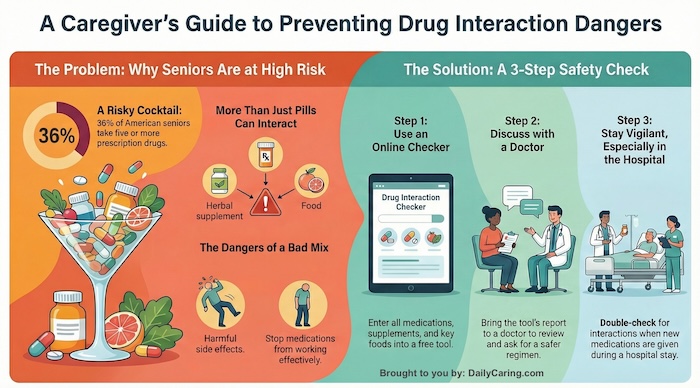
And studies show that 87% of American seniors take one prescription drug, 36% take five or more, and 38% use over-the-counter medications.
Even though the majority of American seniors are taking multiple medications, doctors can sometimes miss harmful drug interactions if they don't regularly review the older adult's complete list of medicines, supplements, and certain foods.
And even if a drug interaction isn’t fatal, it can affect how well the medication will work or the likelihood of side effects.
That's why it's wise to double-check on your own or ask your older adult’s pharmacist for help.
To check on your own, we found a helpful online drug interaction checker tool at Drugs.com.
It’s free, simple to use, and makes it easy to check your older adult’s complete list of medicines, supplements, and key foods.
We explain how to use this drug interaction checker tool, how to discuss potential interactions with your doctor, and why it’s essential to double-check new medications given during a hospital stay.
Key Drug Interaction Risks to Be Aware of for Seniors
Adverse Side Effects and Unexpected Symptoms:
Interactions can cause undesirable reactions.
Reduced Medication Effectiveness:
The interaction may prevent a medication from working as well as it should.
Serious Harm to Health:
The most severe risk can lead to complications or even be fatal.
Risk is High for Seniors Taking Multiple Medications:
The majority of seniors take multiple medications (prescriptions, over-the-counter drugs, vitamins, and supplements), which increases the chance of a harmful mix.
Therapeutic Duplication:
This is a specific risk where two medications in the same drug category are taken, potentially leading to an overdose of an ingredient like acetaminophen (e.g., taking Norco, which contains acetaminophen, plus Tylenol).
INFOGRAPHIC: A Caregiver's Guide to Preventing Drug Interactions
How to Use the Drugs.com Drug Interaction Checker
We like using the Drugs.com drug interaction checker because it’s free, trustworthy, and easy to use.
To check three or fewer drugs, no sign-up is needed. To check four or more drugs, you’ll need to sign in or create a free account.
We think this tool is worth the extra step of creating an account because it provides more comprehensive reports than others.
This online tool clearly alerts you to drug interactions in your older adult’s medication list and explains how dangerous they are, from minor to serious.
Vitamins, supplements, and common foods with known interactions (like grapefruit) are also included.
This tool also alerts you to potential therapeutic duplication, meaning two medications are in the same drug category – other tools typically don’t include this feature.
For example, therapeutic duplication could happen if your older adult takes a medication that contains acetaminophen, like Norco, but also takes Tylenol for another reason. Added together, they might exceed the daily dosage limit on acetaminophen, which could be dangerous.
In this situation, it would be essential to discuss this with the doctor ASAP to determine whether these medications and specific doses are intentional or a mistake.
Real-Life Drug Interaction Checker: Example
For example, we used a list of commonly used medications among older adults to check for potential interactions.
The results shown in the report warn us about these combinations (see images below):
- Lisinopril and hydrocodone could cause dizziness
- Taking multivitamins with warfarin could be problematic
- There might be a minor issue with warfarin and the acetaminophen in Norco
- Norco and alcohol could be a dangerous combination
- Eating grapefruit and taking Norco at the same time could increase blood levels of the drug
- Warfarin has several interactions with specific foods and food groups
IMPORTANT: Never stop, start, or make any changes to medications without a doctor’s authorization. Using a drug interaction checker tool isn’t a substitute for discussing an older adult’s medications with their doctor. For questions or concerns about medications, vitamins, or supplements, always consult a doctor, nurse, or qualified medical professional before making any changes.
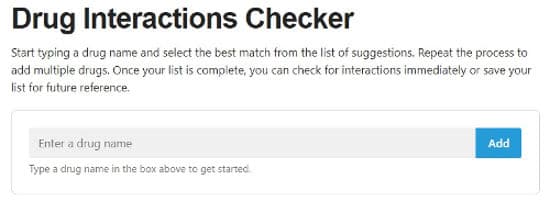
Enter medications, one at a time, to build a list (from the Drugs.com tool)
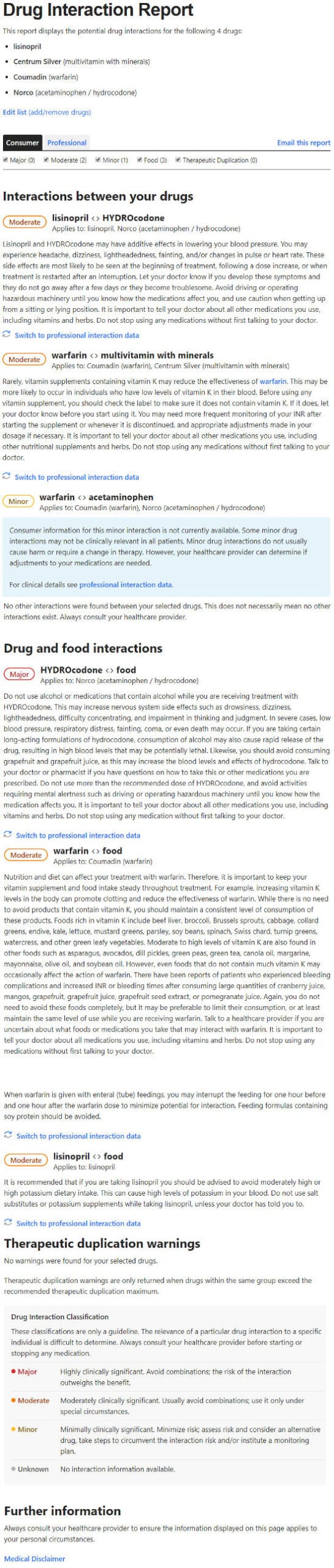
Sample list of medications and their drug and food interactions (from Drugs.com tool)
VIDEO: How to Minimize the Risk of Drug Interactions for Seniors
Discuss all Medication Prescriptions with Your Doctors
When your older adult visits their doctor, ask them to review their complete list of medications, vitamins, and supplements.
This is especially important if they see multiple doctors – each doctor is often unaware of what others have prescribed.
As a starting point, print the drug interaction checker’s report, show it to your older adult’s doctor, and ask how to make their medication regimen safer.
The notes and information in the report help you ask specifically if changes in medications are needed, why they’ve made confident medication choices, and how to reduce the risk of potential side effects.
The doctor should also be able to recommend timing for specific drugs or foods that need to be taken hours apart for safety or effectiveness, or warn against certain foods.
Check Drug Interactions to Avoid Mistakes in the Hospital
If your older adult is in the hospital or another health facility, medical staff will likely give them new medications in addition to their existing ones.
Unfortunately, mistakes can happen easily because hospitals are busy places with constant changes in nursing staff and aides who directly care for your older adult.
To avoid problems, get a list of new and existing medications so you can double-check everything using the drug interactions checker.
The last thing your older adult needs while they’re in the hospital is additional health issues caused by a preventable medication error.
Final Thoughts About Drug Interactions
Taking these steps to investigate your loved one's medications isn't just about checking boxes; it's an act of profound care and protection. You are becoming their most powerful health advocate, ensuring their treatments are working for them, not against them.
So, take a deep breath, gather those bottles, and start the conversation today. This single, proactive effort can be the key to safeguarding their well-being and gifting you both greater peace of mind.”
Recommended for you:
- 10 Tips for Safe Medication Management for Seniors
- The Beers List: Medications Seniors Should Use with Caution
- 10 Medications That Cause Falls in Seniors: Use with Caution
About the Author

Connie is the founder of DailyCaring.com and was a hands-on caregiver for her grandmother for 20 years. (Grandma made it to 101 years old!) She knows how challenging, overwhelming, and all-consuming caring for an older adult can be. She also understands the importance of support, especially in the form of practical solutions, valuable resources, and self-care tips.