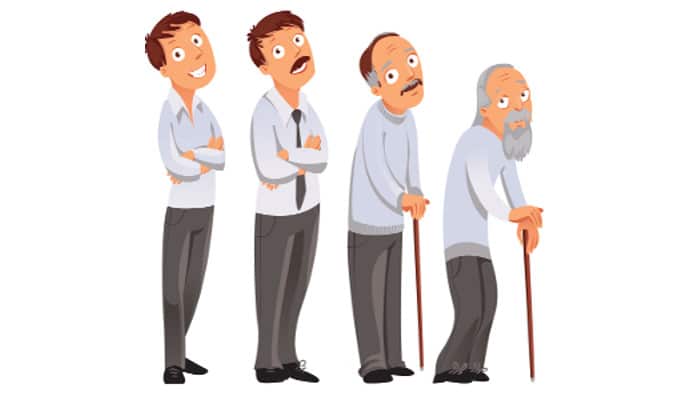












I've learned that in a caregiver's home, worry is often the loudest sound. It’s the clock ticking at 3 a.m. while you wonder if your parents’ third trip to the bathroom is a UTI or just a “weak bladder.” We watch for changes like hawks, terrified of missing the one thing that matters.
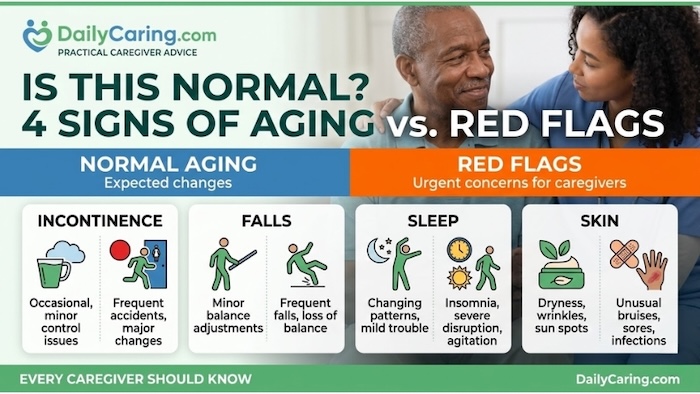
But here is the truth for 2026: The key to longevity isn't stopping the aging process; it’s “worrying smarter.” It begins with knowing which shifts are the body’s predictable response to normal aging, and which are “Red Flags” that require an immediate call to the doctor.
Signs of Aging: What's Normal and What's Not?
1. Sleep: The “Circadian Reset”
It is normal for seniors to sleep less deeply and wake up earlier. However, we now know that sleep is a “heart health” variable. According to a 2026 study in JAMA Network, disrupting the body's internal clock with bright night-time light increases heart attack risk by 56%.
Beyond lighting, chronic loneliness in aging adults can also trigger poor sleep patterns and increased cortisol, further impacting heart health.
- Normal: Waking up at 5 a.m. or taking a short afternoon nap.
- Red Flag: Excessive daytime sleepiness or “Sundowning” (increased confusion in the evening).
2. Bladder Health: Muscles vs. Infections
A common myth is that total incontinence is “normal.” It isn't. While the bladder muscles naturally weaken, sudden loss of control is usually a sign of a treatable issue, such as a UTI or a medication side effect.
- Normal: Needing to pee more frequently or a slight “leak” when laughing.
- Red Flag: Pain during urination, blood in urine, or a sudden, total inability to make it to the bathroom.
3. Falls: The Visual-Balance Connection
Falls are the leading cause of injury for seniors, but they are not an inevitable part of aging. As we age, we often lose the ability to distinguish “depth” in low light. This is why upgrading to motion-sensing lighting is one of the most effective medical interventions you can make at home.
- Normal: Walking more slowly or cautiously; needing to use the handrail on every step of the stairs.
- Red Flag: Sudden dizziness or vertigo, a “near miss” where they almost fell for no reason, or any actual fall (even if they weren't hurt).
4. Skin: Protecting the “Fragile Envelope”
Older skin is like tissue paper—beautiful, but easily torn. While “normal aging” includes thinning and dryness, we must watch for the “Silent Flag” of pressure sores. These can develop in as little as two hours in a senior with limited mobility.
- Normal: Skin that looks “crepy” or thin, the appearance of “liver spots,” and minor bruising from small bumps.
- Red Flag: A red or darkened area that doesn't turn white when you press it (a “non-blanching” spot), any open sore, or a mole that is changing color or shape.
The “Worry Smarter” Weekly 60-Second Check
Before You Call the Doctor
If your wellness check uncovers a Red Flag, your next move is crucial. Use the guide below to ensure you have the right data ready for the medical team.
Pro-Tip: Be Prepared for the Call
When you spot a Red Flag, anxiety can make it hard to remember specific details. Have these four points ready before you dial the doctor:
- Timing: Exactly when did it start? (e.g., “Suddenly this morning” vs. “Gradually over two weeks”)
- Medications: Note any new prescriptions or dose changes from the last 14 days.
- Vitals: If you have a thermometer or BP cuff, take those readings now.
- The “One Thing”: What is the single most concerning change you've seen today?
Recommended Next Steps
Once you’ve identified which signs are normal and which require a doctor’s attention, the next step is making the home environment as supportive as possible. If you’re concerned about fall risks, explore our 2026 guide to senior lighting to see how simple visual upgrades can prevent accidents.
If a ‘Red Flag' like a UTI is suspected, read our guide on how UTIs mimic dementia symptoms so you can provide the right information to your healthcare provider.
You might also like:
— Links We Love: Caring for Parents Is Hard
— Bathroom Safety for Older Adults: Grab Bars and More!
— Home Health Care vs In-home Care: What's the Difference?
About the Author

Chris is a seasoned healthcare executive and entrepreneur from the Pacific Northwest. He strongly advocates for older adults and the caregivers who serve them. Chris has personal experience caring for his father, who had dementia. Chris is a technology enthusiast and an avid outdoorsman; if he's not in his office, he can usually be found on a golf course or fly-fishing out west somewhere.