











If you’ve ever noticed your aging parent becoming more withdrawn after retirement or the loss of a spouse, you might have chalked it up to “the blues.” But recent medical research, including a groundbreaking 2026 study from Vanderbilt University, tells a much more urgent story.
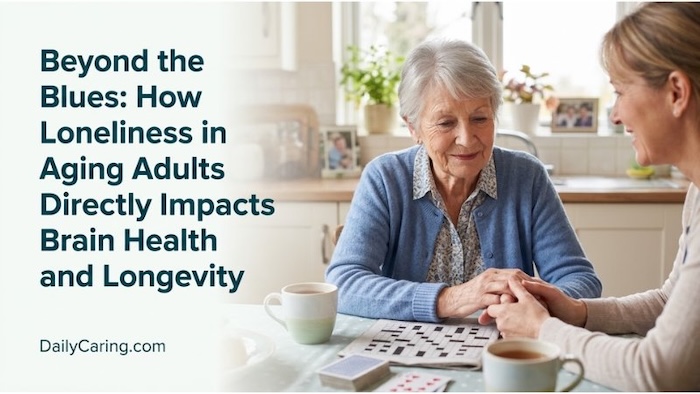
Loneliness in aging adults isn’t just a social issue; it’s a neurological one. As neuropsychiatrist Reza Hosseini Ghomi recently shared, the transition from a bustling “relational ecosystem” at work to the quiet of a solo retirement can trigger measurable cognitive decline.
The “Social Architecture” of the Brain
When we stop interacting with others, our brains lose their most consistent “workout.” Social interaction requires attention, processing speed, and emotional regulation. Without it, the brain essentially begins to decondition.
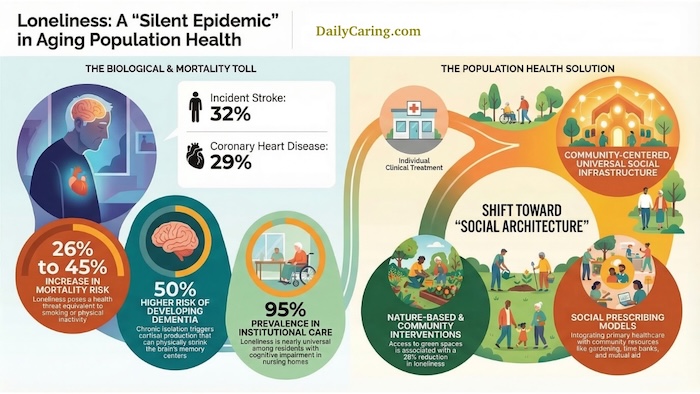
Even more startling is the physiological impact. Chronic loneliness raises cortisol levels, which can eventually shrink the hippocampus – the part of the brain responsible for forming new memories. This is probably why social isolation increases dementia risk by roughly 50%, a risk level comparable to smoking or physical inactivity.
VIDEO: The Impact of Loneliness on Brain Health
Loneliness as a Mediator for Mental Health
A March 2026 study published in JAMA Network Open by researchers at Vanderbilt Health analyzed data from over 62,000 participants. They found that loneliness is a critical “mediator” between anxiety/depression and suicidal ideation. Essentially, while anxiety and depression are significant, it is often the accompanying sense of isolation that pushes these feelings toward a crisis.
As Britton Ashley Arey noted in the discussion of this research on LinkedIn, “Social architecture” is the right phrase. Retirement planning that focuses only on finances while ignoring social infrastructure is like managing cholesterol while ignoring sleep—you’re missing a core health variable.
The Health Toll of Isolation in Aging Adults
The “Silent Epidemic”: Health Risks of Loneliness in Seniors
Clinical research shows that social isolation is a physiological stressor on par with well-known physical health hazards.
Visualizing the Risk Factor Increase
| Health Outcome | Increased Risk | Authority Source |
|---|---|---|
| Developing Dementia | ~50% Increase | National Academies (NASEM) |
| All-Cause Mortality | 26% – 45% Increase | Harvard Gazette |
| Incident Stroke | 32% Increase | NIH / PMC Study |
| Coronary Heart Disease | 29% Increase | CDC Aging Portal |
Note: Percentages reflect the increased risk for seniors experiencing chronic loneliness compared to those with strong social engagement.
Investing in “Social Fitness”
For over 80 years, the Harvard Study of Adult Development has followed the lives of hundreds of men and their families. The findings are remarkably consistent: relationship quality at age 50 is a better predictor of health at age 80 than cholesterol levels, wealth, or even IQ.
““Loneliness kills. It’s as powerful as smoking or alcoholism… Good relationships don’t just protect our bodies; they protect our brains.”
As a caregiver, how can you help your loved one rebuild their “social architecture”?
- Schedule Connection Like a Prescription: Treat social outings or phone calls with the same importance as a doctor's visit.
- Look for “Low-Intensity” Interaction: If your loved one has depression, a big party might be overwhelming. Start with a walking group or a regular 15-minute video call. Small, consistent interactions often matter more for memory protection than big events.
- Address the “Split-Care” Gap: If your parents live separately (one in memory care and one at home), the well spouse is at extreme risk. Check out our guide on coping with parents living separately in assisted living to help bridge that emotional gap.
- Know the Signs of Clinical Depression: Loneliness is a precursor, but if you notice significant weight loss or withdrawal for more than two weeks, consult a professional. You can use our 1 in 10 seniors depression guide to help identify the red flags.
Final Thoughts About Loneliness in Aging Adults
We often spend decades preparing for the financial shift of retirement, but we rarely prepare for the relational one. By treating loneliness as a core health variable and social engagement as a form of clinical intervention, we can protect our loved ones’ brains and spirits for years to come.
About the Author

Chris is a seasoned healthcare executive and entrepreneur from the Pacific Northwest. He strongly advocates for older adults and the caregivers who serve them. Chris has personal experience caring for his father, who had dementia. Chris is a technology enthusiast and an avid outdoorsman; if he's not in his office, he can usually be found on a golf course or fly-fishing out west somewhere.