












Loneliness has a bigger negative impact on senior health than many people realize. It can increase the risk of depression, poor nutrition, cognitive decline, and more.
Fortunately, there are many ways to prevent loneliness among seniors. In this piece, Daily Caring discusses how assisted living communities can improve overall health by increasing opportunities for socialization.
As we age, we often lose social connections. According to Greater Good Science Center at UC Berkeley, we lose ‘social capital’ as we age – typically because of retirement, family members moving away, or losing family and friends to illness and death.
The natural reduction in daily social contacts has a negative impact on physical and mental health.
Fortunately, there are ways to improve this. Friendships and regular socialization improve overall health.
One study published in The Journals of Gerontology found that well-designed senior assisted living communities can maximize socialization, happiness, and quality of life. Providing your older adult with more opportunities to socialize, such as living in an assisted living community, may help them thrive.
The Benefits of Socialization for Seniors
Being social is an important influence on senior health and well-being. Many studies have shown the positive effects of socializing for seniors, including:
1. Boosted Mental Health and Sharper Cognition
Social isolation is one of the leading contributors to mental health struggles in older adults. Research shows that more than 7 million seniors experience symptoms of depression. However, consistent, meaningful interaction acts as a protective shield for the brain.
Engaging with others helps reduce the risk of both clinical depression and dementia by keeping the mind active and emotionally supported. In an assisted living environment, daily interactions, from morning coffee to group activities, provide the cognitive stimulation needed to slow age-related decline.
2. Better Nutrition and the “Dining Room Effect”
Socialization plays a surprisingly large role in physical nourishment. When seniors live alone, they are significantly more likely to suffer from malnutrition due to “tea and toast” syndrome; skipping meals because cooking for one feels like a chore.
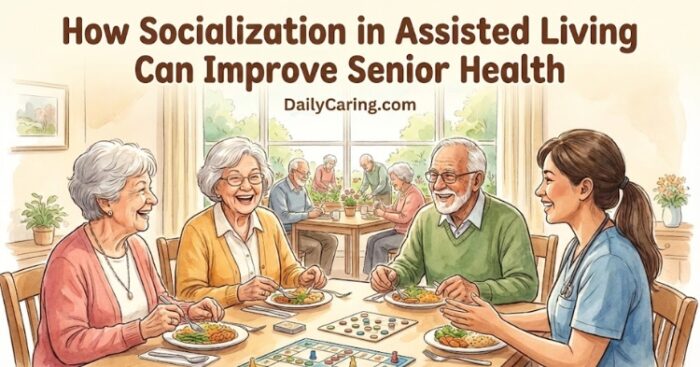
Friendly, lively social interactions during mealtime can improve nutrition by encouraging seniors to stay at the table longer and eat more diverse foods. Assisted living communities turn eating into a social event, which naturally improves appetite and overall health.
3. Improved Physical Health and Longevity
A socially active life does more than just lift the spirits; it has measurable physical benefits. Seniors with strong social ties often experience less chronic physical pain and lower blood pressure. Active socialization has even been linked to a boosted immune system, helping aging bodies fight off illness more effectively.
By reducing the stress and inflammation associated with loneliness, community living can increase a senior’s overall longevity and daily vitality.
Loneliness Can Increase Health Risks
According to Seniorly, some older adults who live at home may still experience loneliness. Even with great in-home care, they may not be getting the amount of contact and communication they need.
Studies show that loneliness can increase health risks, with Forbes reporting that loneliness could be a bigger health risk than obesity or smoking, and another study showing that social isolation increased the risk of death by as much as 30%. Socially isolated seniors often experience higher mortality rates as well.
For many aging adults, the key to increasing socialization may be attending an adult day program, moving to an assisted living community, or considering another type of senior housing.
Caregiver Tip: When touring an assisted living community, don’t just look at the activity calendar. Stop and watch a scheduled activity in progress. Are residents engaged and smiling, or just sitting in the room? This gives you a true sense of the social atmosphere.
Assisted Living Communities Help Increase Socialization
An assisted living community can make it easier for residents to socialize with their peers.
In many assisted living facilities, there are plenty of common areas where people can gather, as well as structured activities like games, cultural events, dancing, field trips, and more.
The New York Times reported that levels of loneliness and social isolation are growing among seniors, and it’s taking a toll on physical and mental health. The article notes that many elders benefited from living in retirement communities because of the shared activities, convenience, and larger number of potential friends with similar interests.
Question for our readers: Has your loved one experienced a ‘social spark' after moving to an assisted living community or attending a day program? Share your experience in the comments below!
Socializing at Home vs Assisted Living: A Comparison Table
| Key Benefit | Socializing at Home | Assisted Living Community |
|---|---|---|
| Daily Interaction | Often limited to caregivers or scheduled visitors. | Constant opportunities with peers and dedicated social staff. |
| Mealtime Experience | Often eaten alone, leading to “Tea and Toast” syndrome. | Shared dining room experience with varied menu choices. |
| Activities & Hobbies | Requires difficult transport and outside coordination. | Built-in, diverse calendar of on-site events and outings. |
| Cognitive Support | Isolation can lead to faster cognitive decline. | Consistent engagement serves as a “protective shield” for the brain. |
Checklist: 6 Social Questions to Ask While Touring an Assisted Living Facility
1. The “Welcome” Process: “How do you help new residents get acquainted and start making friends during their first 30 days?”
2. Tailored Interests: “What specific clubs or activities do you have for residents who aren't into typical ‘bingo' games (e.g., book clubs, gardening, or tech workshops)?”
3. Encouraging Participation: “How do staff members gently encourage residents who are shy or withdrawn to join in on social events?”
4. Dining Dynamics: “Is there assigned seating in the dining room, or can residents choose who they sit with to foster new connections?”
5. Family Inclusion: “Are family members and friends encouraged to join in on community social events or meals?”
6. Resident-Led Groups: “Are there opportunities for residents to start their own interest-based groups or committees?”
Assisted Living Facility Comparison Tracker
| Social Feature Checklist | Facility A | Facility B |
|---|---|---|
| New Resident Buddy System? (Does a peer help them settle in?) | ☐ | ☐ |
| Activity Variety: (Do they offer more than just bingo/TV?) | ☐ | ☐ |
| Flexible Dining: (Can residents choose their table-mates?) | ☐ | ☐ |
| Staff Engagement: (Did you see staff chatting warmly with residents?) | ☐ | ☐ |
| Outdoor/Social Spaces: (Are common areas inviting and active?) | ☐ | ☐ |
| Family Inclusion: (Are visitors encouraged to join activities/meals?) | ☐ | ☐ |
Final Thoughts on How Assisted Living Can Combat Loneliness
In summary, the compelling evidence leaves little doubt: meaningful social connection is not merely a lifestyle enhancement for seniors; it is a fundamental component of holistic health. As outlined, assisted living communities strategically counter the “loss of social capital” that often accompanies aging by creating environments rich with shared activities and daily opportunities for engagement.
The benefits are profound and measurable, directly combating the severe health risks linked to loneliness and isolation by improving mental acuity, nutritional intake, and physical vitality. For families considering care options, this underscores a critical advantage of community living – it actively transforms a living space into a therapeutic and vibrant social network.
Ultimately, choosing a setting that prioritizes socialization is an investment in a loved one's happiness, longevity, and overall quality of life, ensuring they don't just live, but truly thrive.
Recommended for you:
- 3 Tips to Help You Choose Between Assisted Living vs In Home Care
- Handy Checklist and Tips on How to Find a Good Assisted Living Facility
- How to Pay for Assisted Living: 6 Options
About the Author

Chris is a seasoned healthcare executive and entrepreneur from the Pacific Northwest. He strongly advocates for older adults and the caregivers who serve them. Chris has personal experience caring for his father, who had dementia. Chris is a technology enthusiast and an avid outdoorsman; if he's not in his office, he can usually be found on a golf course or fly-fishing out west somewhere.