













For many seniors living with Alzheimer’s or dementia, maintaining their physical appearance is a vital way to preserve their dignity and sense of self. However, as cognitive decline progresses, the once-simple tasks of choosing an outfit or buttoning a shirt can become sources of intense frustration.
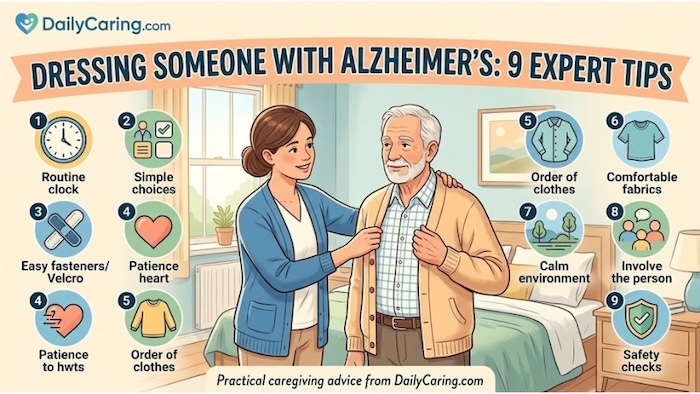
As a caregiver, your goal is to bridge the gap between their desire for independence and the challenges they face. By simplifying the environment and adapting your approach, you can transform the daily dressing routine into a successful, stress-free experience that honors their identity.
Everyday activities are challenging for seniors with Alzheimer’s or other dementias
Helping seniors with dementia look the way they always have helps boost their self-esteem. But the disease can make everyday activities like dressing and grooming challenging for both older adults and caregivers.
9 Tips to Simplify Dressing Someone with Alzheimer’s Disease
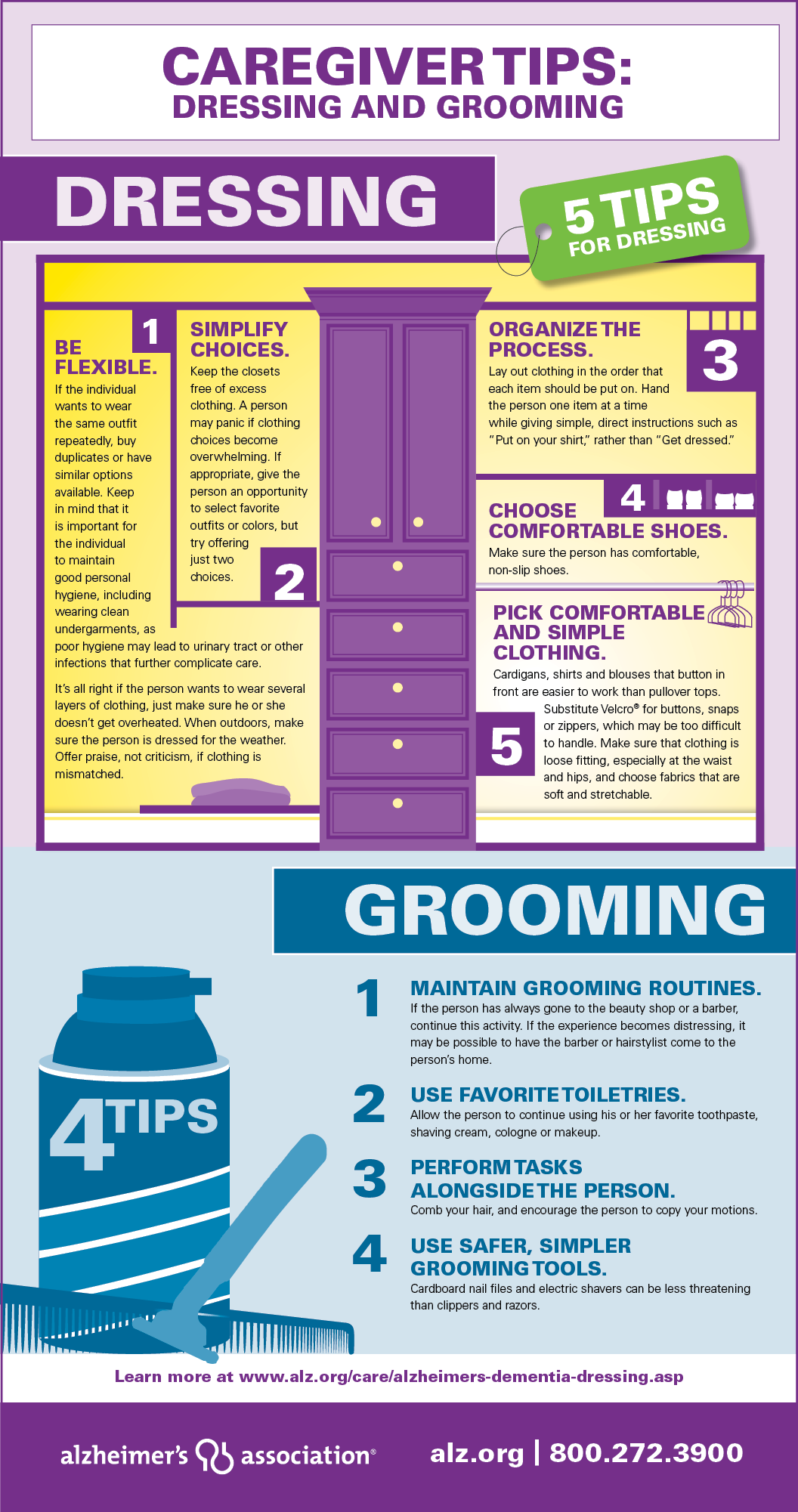
We found this useful infographic from the Alzheimer’s Association with 9 expert tips to help you simplify dressing and grooming your older adult. Following this advice increases the chances they’ll feel successful and makes it easier for you to help them.
1. Plan Plenty of Time
Getting dressed should never feel like a race. When a caregiver is in a rush, that tension is easily picked up by a person with dementia, often leading to anxiety, resistance, or even combativeness.
By scheduling the day so there is no pressure to move quickly, you create a calm atmosphere. This allows your loved one to move at their own pace, making the process a peaceful interaction rather than a stressful chore.
2. Simplify Their Choices
A closet full of choices can lead to “decision paralysis” for someone with Alzheimer's. To reduce panic and confusion, try offering only two complete outfits or color options at a time. This approach empowers the senior to maintain their independence by making a choice, but within a limited range that prevents them from feeling overwhelmed by unnecessary possibilities.
3. Organize the Dressing Process
Breaking down a complex task into small, manageable steps is one of the most effective strategies in dementia care. You can simplify the sequence by laying out clothing in the exact order it should be put on – starting with undergarments and ending with a shirt or sweater.
Handing them one item at a time while providing short, direct instructions like “put your arm in the sleeve” helps them stay focused and successful.
4. Pick Comfortable and Simple Clothing
As fine motor skills decline, traditional fasteners like buttons, snaps, and zippers can become impossible hurdles. To reduce frustration, prioritize clothing with Velcro closures, elastic waistbands, and front-opening designs. Choosing soft, stretchable fabrics also ensures that the clothing is easy to put on and doesn't cause physical restriction or skin irritation throughout the day.
5. Prioritize Safe and Comfortable Shoes
Proper footwear is essential for both comfort and fall prevention. Look for non-slip shoes with sturdy soles that provide good traction. Whenever possible, choose slip-on styles or shoes with Velcro straps to eliminate the struggle of tying laces. Ensuring a secure fit helps your loved one feel grounded and stable as they navigate their home.
6. Maintain Flexibility and Patience
In the world of Alzheimer’s care, a successful outcome is more important than a “perfect” look. If your loved one wants to wear the same favorite outfit every day, consider buying duplicates to ensure they always have a clean set. If their clothes end up mismatched or are worn in an unusual way, try to let it go. Focus on getting dressed rather than on color coordination.
7. Continue Regular Grooming Routines
Maintaining long-standing grooming habits is a powerful way to boost a senior’s self-esteem. If they have always enjoyed going to a specific barber or beauty shop, try to keep those appointments as part of their routine for as long as possible. If traveling becomes difficult, look for a mobile stylist who can come to the home to provide that familiar sense of care and dignity.
8. Use Favorite Toiletries and Scents
The senses of smell and touch are deeply linked to memory and comfort. Using the specific brands of shaving cream, perfume, or soap that your loved one has used for decades can provide a soothing sense of familiarity. These sensory cues help make grooming feel like a cherished part of their lifelong personal routine rather than a clinical task performed by someone else.
9. Perform Tasks Alongside Them
Sometimes, verbal instructions can be confusing. By standing in front of a mirror and performing a task – like combing your hair or brushing your teeth, while they do the same, you provide a clear visual cue for them to mirror. This “watch me” technique encourages active participation and helps them remember the physical motions required for their daily grooming routine.
Final Thoughts About Dressing Someone with Alzheimer's Disease
Ultimately, dressing and grooming are deeply personal acts that reflect our history and identity. By following these expert strategies, you aren't just helping a loved one get through their morning routine; you're protecting their dignity and helping them feel like themselves for as long as possible.
Remember to celebrate the “small wins” and focus on the connection you are building during these quiet, everyday moments.
Next Steps: Download or print this handy infographic tip sheet as a PDF
You might also like:
— How to Help Someone with Alzheimer’s Brush Their Teeth
— Buck & Buck Specialized Senior Clothing Solves Dressing Problems
— How to Talk to Someone with Alzheimer’s: Use Short, Direct Sentences
About the Author

Chris is a seasoned healthcare executive and entrepreneur from the Pacific Northwest. He strongly advocates for older adults and the caregivers who serve them. Chris has personal experience caring for his father, who had dementia. Chris is a technology enthusiast and an avid outdoorsman; if he's not in his office, he can usually be found on a golf course or fly-fishing out west somewhere.


Thank you for this information. It surely will help me with my mother-in-law.
You’re very welcome! So glad this is helpful!