













Navigating doctor visits with an aging parent often devolves into a battleground of withheld symptoms, minimized pain, and outright refusal to discuss sensitive topics like cognitive decline or driving risks.
As a caregiver, finding the line between respecting their autonomy and advocating for their actual medical needs is difficult but mandatory. You cannot afford to leave these appointments with unanswered questions or inaccurate medical advice simply because the clinician only heard half the story.

To avoid conflict when helping seniors at doctor's appointments, you must strategize before entering the waiting room. We extracted the most effective tactics from the Next Step in Care guide to help you coordinate a united approach, preempt arguments, and secure the exact medical facts you need.
Key Takeaways: A United Approach to Doctor's Visits
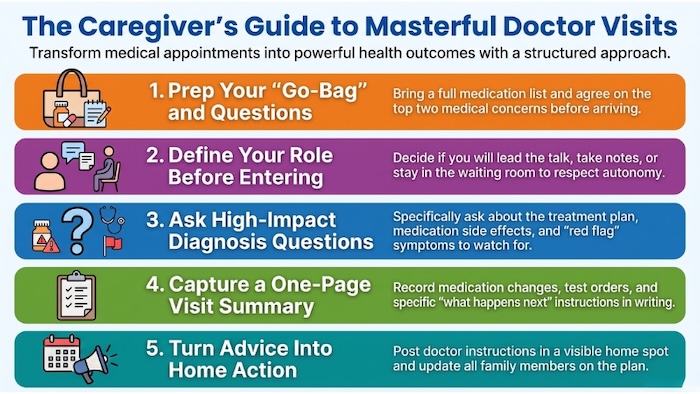
- ✓ Pre-Appointment Alignment: Agree on one or two primary medical issues to discuss together. Plan to address highly sensitive topics privately to prevent defensiveness.
- ✓ Define Your Role: Clarify beforehand if you will stay in the waiting room, sit quietly to take notes, or actively step in to ask the clinician questions.
- ✓ Gather Critical Data: Always arrive with a physical or digital list of all active prescriptions, over-the-counter vitamins, and notes from previous specialist visits.
- ✓ Post-Visit Review: Debrief immediately after the appointment to establish what they felt went well and what they wish was handled differently.
- ✓ Manage Conflicts Offsite: If disagreements escalate regarding care decisions, schedule a private call with the clinician rather than arguing in front of the patient.
Doctor’s Visits Can Be a Challenge for Caregivers
Accompanying your older adult to their doctor’s appointments is essential, but it can be challenging.
While you’re there, you might disagree on what to discuss, they might lie about their symptoms, or they may refuse to discuss sensitive topics.
It can also be tough to find the right balance between letting them speak for themselves and stepping in to bring up essential topics or clarify key facts.
But even if you don't want to “take over,” your loved one might need help asking the right questions or understanding the clinicians' instructions.
Aging adults may need a strong advocate if the doctor isn’t giving them the attention they deserve or is asking them to make big decisions without explaining the risks.
Here is a summary from the good folks at “Next Step in Care” of how to get the most out of a doctor's visit:
Before Your Doctor’s Visit:
Set the stage for success
Try to coordinate the appointment time that works best for both you and your loved one, so there are no time constraints or distractions. Hopefully, during times when they have the most energy and when you’re able to set aside enough time.
Gather essential information
Make sure to gather information the doctor will need to review, especially:
- Information from prior visits with doctors and specialists.
- Gather a list of all prescription medications, over-the-counter medications, vitamins, and supplements – try this helpful free medication management form.
Agree on what to discuss
Because there are two people involved in the visit, it’s essential to ensure you’re in agreement on which concerns to raise and how to discuss them.
For example, you might both agree to discuss their recent swallowing problems, but they refuse to discuss your concerns about their driving and judgment. They might also have concerns about incontinence symptoms but don’t want to talk about it in front of you.
Sometimes it's best to discuss the top 1 or 2 agreed-upon issues together with the doctor. Then, let your loved one know you’ll step out so they can discuss sensitive issues privately. (When you need to talk with the doctor about issues that your older adult refuses to discuss, it might be best to do it alone before or after the visit.)
For example, your older adult might get angry, defensive, or lie if you bring up driving problems or potential cognitive issues.
Many doctors are willing to schedule a phone call to talk privately. If that’s the case, be mindful of their limited time and stick to only the issues that you can’t discuss when your older adult is present.
Agree on how you’ll help
Before the appointment, it helps to talk with your family member to find out how they’d like you to help.
They might want you to stay in the waiting room or come into the exam room for part or all of the visit.
In the exam room, they may only want yoy to take notes to remind them of the key issues to discuss. You could make sure important information, such as new medication, is clear.
Discussing this ahead of time helps your loved one relax, since they’ll know you won’t be “taking over” without their consent.
Of course, if your care recipient has a significant cognitive impairment or isn’t able to communicate, you’ll naturally be taking a more active role.
During the Doctor’s Visit
During the appointment, let the doctor know that you and your partner will both be participating.
When possible, allow your loved one to answer questions and speak for themselves. But if there’s a situation where they need help, you may need to speak up.
For example, if the doctor hasn’t provided enough information but is asking them to make a decision, step in and ask the doctor to clarify.
Or maybe something the doctor has said conflicts with something a different specialist has said – in that case, ask them to explain the differences.
And if the doctor has asked you to perform a new care task, like caring for a wound, make sure you clearly understand how to do it.
Don’t be afraid to ask questions, watch a demonstration, or request training.
After the Doctor’s Visit
After the appointment, it’s often helpful to chat about how it went. You can find out whether they thought it was a good visit and why or why not.
Specifically, you could ask whether they felt you asked the right number of questions, whether they wanted some alone time with the doctor, or whether there was anything they wished had gone differently.
What to Do If There Are Conflicts Before or After Your Doctor's Appointment
There might be times when you and your family member won’t agree on important issues. If that happens, try the following:
- Ask a trusted family member or close friend to accompany your older adult to the doctor and then let you know what happened.
- Schedule a phone call with the doctor or nurse to get the information you need, rather than arguing with your older adult about it.
- Ask the doctor or nurse if they can refer you to someone who can help resolve these disagreements, such as a counselor.
Frequently Asked Questions
How can I prepare for a doctor's appointment with an aging parent?
Gather a list of all active prescriptions, note any specific health concerns, and agree on one or two primary issues to discuss together prior to the visit.
What if my parent refuses to discuss cognitive decline with their doctor?
Contact the clinician's office before the appointment to share your concerns privately, or schedule a separate phone call with the doctor to avoid an argument in the exam room.
Should I stay in the exam room with my elderly parent?
Ask your parent beforehand. They may want you in the room for support and note-taking, or they may prefer you stay in the waiting room to maintain their privacy.
Final Thoughts on Avoiding Conflict During Doctor's Appointments
Preparing for a doctor's visit with an aging parent does not have to end in an argument. By setting clear expectations, gathering necessary medical records, and defining your role before you arrive at the clinic, you can ensure their health needs are met without stripping them of their independence.
Taking the time to align your goals transforms you from an adversary into a critical health advocate. Be sure to download or print the Next Step in Care guide to keep these strategies on hand for future appointments.
Next Steps: Print or save the free guide to avoiding conflicts at doctor’s visits from Next Step in Care (PDF)
Recommended for you:
- 5 Questions to Ask Doctors About Tests and Treatments for Seniors
- 7 Tips for Helping Seniors at the Doctor: Being a Health Advocate
- Better Senior Health from Improved Doctor Visits: 3 Top Communication Tips
About the Author

Connie is the founder of DailyCaring.com and was a hands-on caregiver for her grandmother for 20 years. (Grandma made it to 101 years old!) She knows how challenging, overwhelming, and all-consuming caring for an older adult can be. She also understands the importance of support, especially in the form of practical solutions, valuable resources, and self-care tips.



The biggest problem I and my husband have faced, until we found our current Primary Care Provider who is part of the Optum Health Primary Care group, is first, disrespect for my husband and, second, respect for me as wife and caregiver.
He was ignored by one and talked about in front of him in a dismissive way. At one dentist, who was asking my husband questions which my husband answered incorrectly – his memory is gone – gave me a stink eye and turned his back on me as I attempted to give correct history.
Not all providers are comfortable dealing with a patient with Dementia nor are they comfortable with a wife/husband/caregiver being in the room and interjecting the correct information. Needs to taught in medical school – eliminate the stigmas and misinformation and let each potential doctor know – along with nurses and nurse practioners – you must treat each patient with dignity, respect and the same for the caregiver. HIPPA does not count when your patient is unable to answer your questions. The caregiver/spouse can.
Absolutely, education is a must for healthcare professionals so they understand how important it is to treat both the patient and their caregiver with respect and to know how to get accurate information.