












For years, the world of aging technology felt like a collection of niche gadgets, emergency buttons, and simplified cell phones. But as we enter 2026, the market has undergone a radical transformation.
What was once a “nice-to-have” has become a literal lifeline for the 63 million family caregivers now managing care in the U.S.
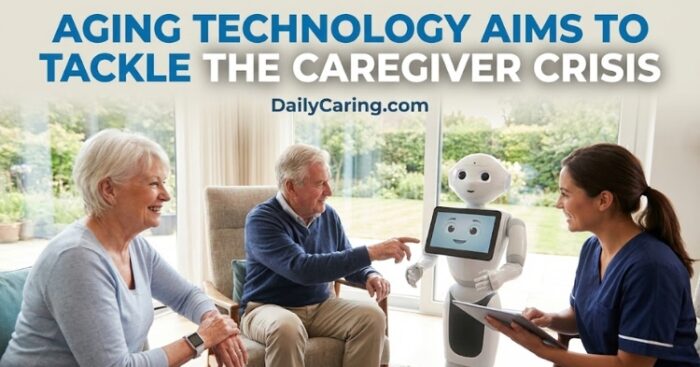
The global AgeTech economy is now valued in the trillions, but for a family at home, the numbers that matter are much more personal. We are currently facing the “Caregiving Crisis“: a reality where the demand for senior care is growing 17% faster than the professional workforce can support.
3 Reasons Aging Technology is No Longer Optional in 2026
1. The Launch of the Medicare ACCESS Model
In a massive shift for 2026, the Centers for Medicare & Medicaid Services (CMS) has launched the ACCESS Model. Starting July 2026, this program provides outcome-aligned payments specifically for technology-supported care.
This means your doctors and home care agencies are now incentivized, and often reimbursed, to provide you with the latest remote monitoring and telehealth tools.
2. The “Hospital-at-Home” Mandate
Healthcare has moved from the clinic to the living room. Over 40% of caregivers are now performing medical tasks, such as IV therapy and post-surgical monitoring, that used to require a hospital stay.
Modern aging technology, from AI-powered sensors to smart medication dispensers, acts as the digital “safety net” that allows families to manage these complex tasks safely.
3. Reclaiming A Caregiver's Evenings
The biggest breakthrough in 2026 isn't a robot; it's the elimination of administrative burnout. The average caregiver spends countless hours per week on “invisible work” – scheduling, insurance calls, and documentation.
New AI-driven platforms are now automating these tasks, finally ending the era of “pajama time” where caregivers work late into the night just to keep records straight.
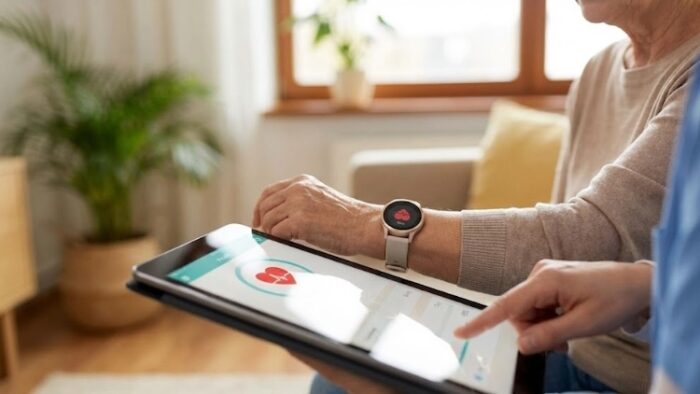
2026 Market Stats: The Aging Technology Surge
| Focus Area | 2026 Reality | Practical Caregiver Impact |
|---|---|---|
| Home Safety Aging in Place |
63 MillionCaregivers Active | Passive sensing technology is replacing cameras. Families are using radar-based fall detection to maintain dignity while ensuring safety. Trend: Privacy-First Monitoring |
| Health Data AI Assistance |
30% GrowthIn AI Adoption | Managing the “Invisible Load.” AI is now being used to transcribe doctor visits and summarize medication changes instantly. Trend: Smart Medical Scribes |
| Economics Market Growth |
$12.6 BillionSector Value | Lowering the cost of entry. Mass-market adoption is finally making smart-home care systems affordable for middle-income families. Trend: Affordable Smart Homes |
Navigating the New Era of Aging Technology
As the AgeTech market continues to grow, your focus should be on interoperability, choosing tools that “talk” to each other and your doctor. By embracing these 2026 trends, you are moving from being a “manual laborer” in caregiving to being a high-level care manager.
Ready to see which tools are worth your time? Check out our latest review of the Best AI Caregiver Assistants for 2026 to find the perfect digital partner for your family.
Final Thoughts: The Era of Digital Caregiving is Upon Us
As we look toward the remainder of 2026 and beyond, the evolution of aging technology is moving away from reactive gadgets toward proactive, integrated ecosystems.
We are entering an era where your loved one’s home will act as a silent partner in their care, using ambient sensors and predictive AI to catch health changes before they become emergencies.
For you, the family caregiver, this means a fundamental shift in your daily life: you are no longer just the person providing physical help, but a high-level care manager equipped with real-time data and automated administrative support.
By embracing these new AgeTech trends, you aren't just adopting new tools, you are building a sustainable future that protects both your loved one’s independence and your own well-being.
Have you used any AI tools in your caregiving role? Share your story with us in the comments below!
About the Author

Chris is a seasoned healthcare executive and entrepreneur from the Pacific Northwest. He strongly advocates for older adults and the caregivers who serve them. Chris has personal experience caring for his father, who had dementia. Chris is a technology enthusiast and an avid outdoorsman; if he's not in his office, he can usually be found on a golf course or fly-fishing out west somewhere.
Hi Chris, great article and we enjoy following DailyCaring.
Your perspective on privacy is vital, but it’s worth distinguishing between ‘cameras’ and intelligent computer vision sensors that are private by default. While radar is excellent for specific use cases, computer vision remains the fastest and most context-rich sensor for complex care delivering the ‘why’ behind an event, not just the ‘that.’ The future is sensor fusion, where these technologies are controlled at the end-user level to provide a life-saving safety net that respects the dignity of the home.
Hi Cathy, thank you so much for sharing your expert perspective! You make a critical distinction between simple cameras and intelligent, privacy-first computer vision.
The concept of ‘sensor fusion’ and keeping data control in the hands of the end-user is exactly the kind of forward-thinking approach we want to highlight for our caregiving community. It’s exciting to see how companies like Wisdom are prioritizing both safety and dignity. We’d love to stay in touch as these technologies continue to evolve!