











As we carefully manage our aging loved ones' health, it's easy to assume that more medications mean better care. But the shocking truth is that seniors are especially vulnerable to dangerous drug interactions and overmedication, where the very pills meant to help can silently cause decline, confusion, and serious harm.
Navigating a long list of prescriptions doesn't have to feel like a high-stakes guessing game. This article will arm you with eight essential tips to become your loved one's most effective advocate, ensuring their medication regimen is as safe and straightforward as possible.
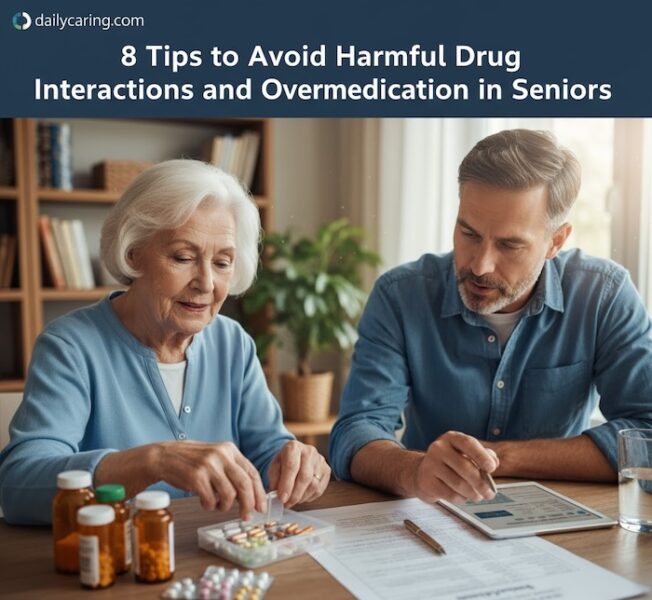
Over-Medicating an Aging Adult Can Be Harmful
According to the CDC, 83% of U.S. adults in their 60s and 70s used at least one prescription drug in the previous 30 days, and about one-third used five or more prescription drugs.
This is a serious problem. Regularly taking multiple prescription drugs puts a person at higher risk of overmedication and adverse drug side effects.
The CDC also states that people over age 65 are twice as likely to go to the emergency room because of a harmful drug reaction and 7 times more likely to be hospitalized.
The good news is that many adverse drug reactions can be prevented.
To reduce the chances of overmedication and harmful side effects, we found a helpful tip sheet from the American Geriatrics Society’s Health in Aging Foundation.
Their printable tip sheet covers eight ways to avoid overmedication in seniors and tips to prevent adverse drug reactions. We’ve explained the key points here.
8 Tips to Avoid Adverse Events and Over-Medication in Seniors
1. Ask Questions Before Taking Any Medications
Always check with your doctor or pharmacist before taking any over-the-counter (OTC) drug, vitamin, or supplement, as they may interact with prescription medications.
OTC medications could also cause serious side effects in older adults or lead to accidental overdoses.
2. Make a List of Active Medications and Keep it Updated
Always keep an updated list of all the medications your older adult takes, including the doses and the times they’re taken.
Be sure to include any OTC drugs, vitamins, supplements, and herbal or other remedies.
Please keep a copy for yourself and share the list and updates with all their doctors and caregivers. Take the list to all medical appointments and keep it on hand in case of emergencies.
3. Review Your Medications Frequently
Once or twice a year, ask your older adult’s primary doctor to review the entire list of medications, supplements, and vitamins.
Some may no longer be needed, or the dose may be lowered, so ask whether each is still required at the current dose.
4. Ask These Questions of Your Pharmacist or Doctor
- Whenever a new medication is prescribed or the dosage is changed, ask why.
- Check new medications for potential drug interactions with existing medications, especially if your older adult is taking 5+ medications.
- What is the purpose of the medication, and how do we know if it’s working?
- What side effects should we be aware of?
- When and how should the medication be taken?
- What to do if a dose is missed?
- Will it affect other medical conditions your older adult has?
- Is a generic or lower-cost brand version of the medication available?
VIDEO: Avoiding Drug Interactions in Seniors
5. Organize Your Medications
Staying organized is essential when it comes to medication. Consider using a pill organizer or ask the pharmacist for tips on tracking medications.
If your older adult has impaired vision, ask the pharmacist for large-print labels on medication bottles.
6. Follow Prescribing Directions
Be sure your older adult takes their medication exactly as prescribed by the doctor.
Make sure you and they understand how, when, and for how long the medication should be taken.
Fill prescriptions at the same pharmacy so they’ll have a record of all the medications that are being taken. Let them know if there were any bad reactions so they can keep that on file.
7. Report Any Adverse Events You May Be Experiencing
If an older adult develops new health problems after starting a new medication, it may be an adverse reaction. Tell the doctor immediately.
If the reaction is severe, such as difficulty breathing or throat swelling, call 911 and go to the emergency room immediately.
8. Pay Attention to Expiration Dates
Your older adult should never take medication that isn’t prescribed for them or has passed its expiration date.
They also shouldn’t stop taking medication because they feel better. They should not drink alcohol when taking certain medications.
Final Thoughts on Medication Safety for Seniors
Your proactive role as a medication manager is one of the most powerful safeguards for your loved one's health. By implementing these eight strategies, you are not just preventing harmful reactions, you are actively championing their safety, clarity, and overall well-being.
Remember, you are an essential part of the healthcare team. Your observations and questions are not a burden; they are a critical layer of protection. Continue to advocate confidently, communicate openly with your doctors, and trust your instincts.
Your diligent oversight is key to ensuring their medication regimen supports their health rather than complicates it.
Recommended for you:
- 6 Common Medication Problems in Seniors and 6 Ways to Solve Them
- Prevent Dangerous Drug Interactions in Seniors with a Drug Interaction Checker
- The Beers List: Medications Seniors Should Use with Caution
This article contains some affiliate links. If you buy through an affiliate link on our site, we may earn a small commission, at no additional cost to you. For more information, see How We Make Money.
About the Author

Connie is the founder of DailyCaring.com and was a hands-on caregiver for her grandmother for 20 years. (Grandma made it to 101 years old!) She knows how challenging, overwhelming, and all-consuming caring for an older adult can be. She also understands the importance of support, especially in the form of practical solutions, valuable resources, and self-care tips.