













In the demanding world of caregiving, your days are often measured by the tasks you manage, the crises you avert, and the quiet, unseen efforts that fill every hour. It's easy to feel like you're running on a treadmill of endless demands, where stress accumulates, and your hard work goes unnoticed.
But what if one of the most effective ways to reduce that crushing stress wasn't about doing more, but about seeing your efforts differently? By intentionally recognizing and celebrating your daily accomplishments, no matter how small, you can shift your focus from the weight of the responsibilities to the power of your own resilience.
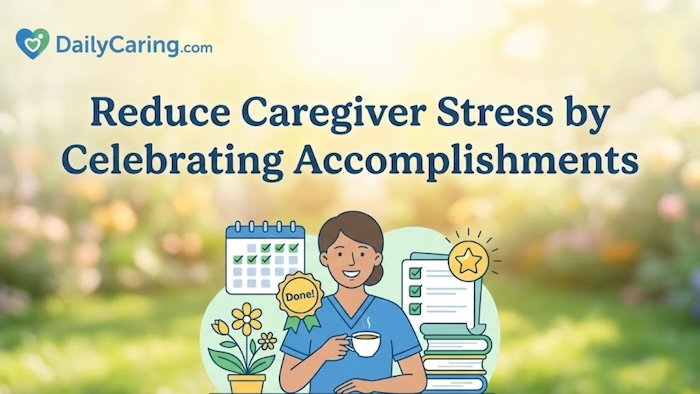
This simple, profound practice is about more than just giving yourself a pat on the back; it's a researched strategy to build emotional strength, improve your mood, and reclaim a sense of control and pride in the vital role you play.
Celebrating Accomplishments Can Reduce Caregiver Stress
Caring for an older adult can be exhausting, overwhelming, frustrating, lonely, and often thankless.
It’s no wonder so many caregivers struggle with stress-related health conditions.
That’s why it’s essential to find a variety of ways to reduce stress.
It’s not realistic to eliminate all the worries and frustrations that come with caregiving. And it’s natural to focus on what went wrong, what to improve, or future challenges.
But what about all the amazing things you accomplish every day?
Recognizing and appreciating these victories is a simple and effective way to reduce stress and boost your mood.
It might sound simplistic, but celebrating accomplishments, both big and small, is truly an effective way to reduce stress.
Plus, you might not even realize how many successes you’ve had. Those wins deserve recognition.
We explain why this type of self-appreciation is essential and how to notice and track your wins.
How Caregivers Benefit From Self-Appreciation
You might think that celebrating your caregiving accomplishments is for others, but you must recognize and appreciate yourself as well.
The way you feel about yourself and how you talk to yourself actually has more impact than what anyone else thinks or says.
At first, it might be more challenging to notice what you’ve done right.
But getting into the habit of celebrating your successes increases positive emotions such as self-respect, happiness, and confidence.
It also reduces stress and boosts your mood because you’re focused on the positive and noticing all the great things you’ve been able to do for your older adult.
Plus, revisiting your accomplishments when you feel discouraged or defeated is a sure way to help you feel better and build the confidence to overcome the next challenge.
Track Your Wins in a Success Journal
A simple way to notice and celebrate your caregiving accomplishments is to track them in a journal.
Write down each win, no matter how small.
Keeping a success journal gets you into the habit of noticing each time you achieve a goal or complete a task.
It also allows you to go back and review all the kind and wonderful things you’ve done to improve your senior’s life.
Accomplishment examples:
- Managed to get dad to take all his medication this evening, even though he insisted that he didn’t need them.
- Got mom to eat a healthy breakfast despite her refusal twice; it took 45 minutes.
- Remained calm and cleaned up the mess after my spouse accidentally spilled a full mug of coffee on the sofa and carpet.
- Finally got mom to shower and change clothes!
- Assisted dad in brushing his teeth and shaving with minimal fuss.
- Got mom out of the house and to the doctor in time for her appointment.
No matter how trivial these accomplishments might sound to a non-caregiver, you know exactly how much energy and effort it took to get them done.
They genuinely are victories and deserve recognition and appreciation.
Keeping a success journal costs nothing and takes only a few minutes – why not give it a try?
Final Thoughts About Caregiver Stress
Starting a success journal or simply taking a moment each day to acknowledge your wins is not a frivolous act, it's an essential form of self-care and stress management. By documenting your victories, from navigating a difficult medication conversation to maintaining your calm during a chaotic moment, you build a tangible record of your competence and compassion.
This practice rewires your perspective, helping you combat burnout and find genuine satisfaction in your caregiving journey. You are accomplishing extraordinary things every single day. Give yourself the credit you deserve, and let that recognition be the fuel that sustains you, reduces your stress, and reminds you just how capable and incredible you truly are.
Recommended for you:
- 15 Quick Tips for Managing Caregiver Stress
- 5 Top Mobile Apps for Caregiver Stress Relief
- 4 Ways to Reduce Caregiver Stress with Positive Self Talk
About the Author

Connie is the founder of DailyCaring.com and was a hands-on caregiver for her grandmother for 20 years. (Grandma made it to 101 years old!) She knows how challenging, overwhelming, and all-consuming caring for an older adult can be. She also understands the importance of support, especially in the form of practical solutions, valuable resources, and self-care tips.


Your very good advice is what I did: I wrote down how I dealt with my mom in a book entitled, “My Mother Has Alzheimer’s and My Dog Has Tapeworms: A Caregiver’s Tale.” I tried to write it with humor and heart, 2 things everyone needs when dealing with Alzheimer’s. Your article mentioned self-affirmation when talking to yourself. I’ll tell you something funny about that: Years ago when I was in college, I was home visiting my parents, and I was practicing a speech (in whispers), for 1 of my classes. My father sees me “talking to myself,” and he was concerned, until I told him what I was doing. I then glanced down at the magazine on my lap, and a sentence read, “Nobody listens to me when I say something, but when I talk to myself, their ears perk up.” I learned as a caregiver, to have as many positive thoughts, spoken or not, about being a caregiver.
It’s wonderful that you found ways to cope with the difficult moments! Thank you for sharing this memory.