













If you ever lie awake at night replaying a moment you snapped in frustration, or feel a pang of guilt for taking an hour for yourself, you're intimately familiar with the heavy cloak of caregiver guilt. It's a constant, unwelcome companion for so many, whispering that you're never quite doing enough.
But what if much of what you believe about this guilt is based on common myths that keep you trapped in a cycle of self-blame? It's time to pull back the curtain on three of the most pervasive misconceptions.
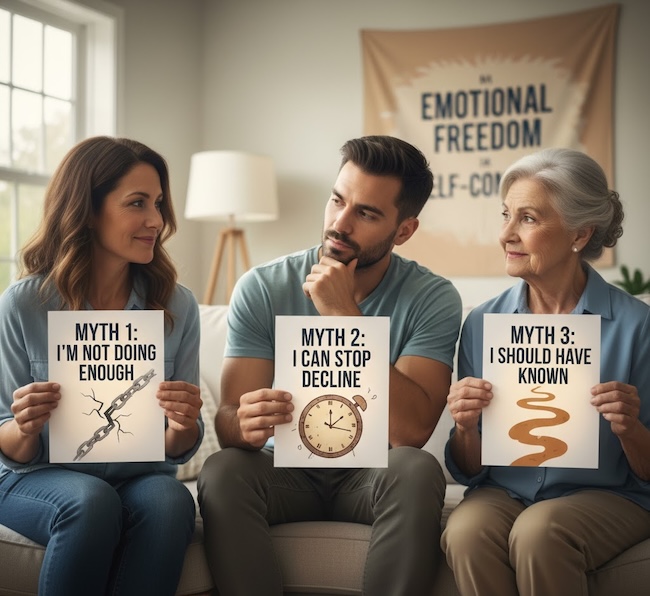
By understanding what caregiver guilt truly is – and what it isn't – you can begin to loosen its grip and reclaim your emotional freedom.
Don’t Suffer Caregiver Guilt Because of Common Misconceptions
When talking with families who are caring for older adults, we hear a lot about caregiver guilt, stress, and angst.
Many of these negative feelings are caused by misguided but common beliefs we impose upon ourselves.
We explain how three common myths influence our thinking and add to our stress, and why they’re not true.
Myth: No matter how much I'm doing or how hard I'm trying, it’s not enough
What we tell ourselves: I’ve got to care for my older adult during every second that I’m not doing something else mandatory – running essential errands, going to work, caring for kids, etc. I should always do more, work harder, and spend more time with them.
Truth: The care that you're providing is terrific and is the best that you can do. Don’t destroy yourself to give an “ideal” level of care that most likely isn’t realistic.
To be a great caregiver without suffering health-damaging consequences, it's crucial to balance your own needs with those of your older adult.
If they need more care than you alone can provide, get help from your caregiving team of family, friends, and hired helpers, and don’t feel guilty about taking time to care for yourself.
Myth: If my older adult continues to decline or doesn’t improve, it's because I'm not doing a good enough job
What we tell ourselves: If I were truly a great caregiver and were really doing my best, my older adult would get better, both physically and mentally.
Truth: Yes, there are situations in which older adults can make physical or mental improvements.
But continuous improvement typically isn’t realistic simply because they’re aging. Also, many seniors have severe progressive health conditions.
These are things that no amount of care can stop or reverse.
VIDEO: What Causes Caregiver Guilt?
Myth: I should have known to make a different decision
What we tell ourselves: Things aren’t going well right now. It’s because of that choice I had to make. I made the wrong choice, and this is all my fault. I should have known better.
Truth: Nobody can see into the future and know what will happen because of the choices they have to make.
You made a decision based on what you knew at the time and made the best choice you could.
If things don't turn out well, it’s neither fair nor realistic to beat yourself up for not being able to see the future or know the outcome.
The most you can do to avoid a regrettable decision is to learn as much as you can and try to prepare for what might happen.
A great way to learn from experience is to join a caregiver support group. You can get valuable advice from people who have already gone through similar situations.
It’s essential to research and prepare, but remember you can’t plan for everything or predict the outcomes of significant decisions.
Regularly remind yourself that you’re doing your best and that nobody can control everything or know the future.
Final Thoughts About Caregiver Guilt
Releasing yourself from the grip of these myths isn't about erasing guilt; it's about transforming it from a source of suffering into a signal for self-compassion. Feeling guilty doesn't mean you are a bad caregiver; in fact, it often signals the profound depth of your love and commitment.
The goal is not a guilt-free life, but a life where guilt doesn't hold the reins. You are navigating one of the most challenging roles there is. Acknowledge your feelings, then gently remind yourself of the truth: you are human, you are doing your best, and that is more than enough.
Recommended for you:
- 7 Ways of Dealing with Caregiver Guilt That Improve Health
- Caring for the Caregiver: 6 Ways to Get Help and Improve Your Health
- 4 Sources of Affordable Counseling Services to Reduce Caregiver Stress
About the Author

Connie is the founder of DailyCaring.com and was a hands-on caregiver for her grandmother for 20 years. (Grandma made it to 101 years old!) She knows how challenging, overwhelming, and all-consuming caring for an older adult can be. She also understands the importance of support, especially in the form of practical solutions, valuable resources, and self-care tips.

This site really helped me with caregiver guilt about placing my mom into an independent living facility
I’m so glad this was helpful. It’s such a tough decision to make, but often when you reach that point, moving to assisted living is the most realistic choice and will keep both you and your mom as healthy as possible.